Suriya brings hope in the shadow of conflicts
In the aftermath of Sri Lanka’s decades-long civil war, one women-led organisation has emerged as a beacon of resilience and recovery. RFSU’s partner organisation The Suriya Women’s Development Centre has spent over 30 years supporting Tamil and Muslim women in the Eastern Province through justice work, cultural expression, and survivor-centered care.
The Suriya Women’s Development Centre was established in 1991 in response to the devastating impact of the war in Sri Lanka, particularly on women and children. As mass displacement forced families into refugee camps, Suriya was founded to support women in these camps through mobile health clinics, peace-building workshops, and cultural activism. When the camps were relocated to Batticaloa in 1993, many of Suriya’s activists moved to the Eastern Province to continue their work.
For over 30 years, Suriya has been a collective of women activists and feminists advocating for the rights of Tamil and Muslim women and girls from marginalised communities in the Eastern Province of Sri Lanka. These communities have endured war, inter-ethnic conflict, massacres, disappearances, repeated displacement, and gender-based violence. Suriya amplifies women's voices through support for survivors of violence, rights advocacy, organising women’s collectives, research, memorialisation, and publications. Using theater and traditional songs, Suriya also promotes self-expression and collective strength.
Four Thematic Areas
Today, Suriya works across four interlinked thematic areas: Gender Justice, Racial Justice, Economic and Environmental Justice, and Cultural Justice. Across all its work, Suriya focuses on strengthening autonomous spaces for women—such as women’s producer cooperative societies, a group for women living with disabilities, and collectives of young women, including those from the LBTQ+ community in the East.
- Gender Justice:
Suriya provides sustained support to women and LBTQ+ individuals facing domestic, sexual, and gender-based violence. This includes legal and psychosocial assistance, case management, referrals, and advocacy for justice. The organisation also works on implementing and reforming family laws, including the Prevention of Domestic Violence Act. - Economic & Environmental Justice:
Suriya strengthens women’s producer collectives, documents transitional women’s knowledge on agriculture and fisheries, and advocates for the recognition of women’s reproductive and unpaid care work. Through research, advocacy, and public education, the organisation highlights the gendered impacts of the economic crisis, food insecurity, and austerity measures—bringing rural women’s voices into public debate. - Racial Justice:
This work focuses on truth, accountability, and transitional justice, fostering collective memorialisation and solidarity among Tamil, Muslim, and Sinhala women affected by the war. Suriya also supports the rights of women living with disabilities. - Cultural Justice:
Suriya challenges harmful stereotypes and social norms through theater, writing, and art—using cultural expression as a tool for resistance and protest. The organisation amplifies women’s voices in public discourse.
Women’s Everyday Struggles in the Wake of Crisis
The COVID-19 pandemic and Sri Lanka’s ongoing economic crisis have made women’s daily lives even more challenging. Many have been forced to survive on one or two meals a day, often prioritising their children and husbands over themselves. With rising food prices, some women skip meals entirely or rely on low-nutrition substitutes just to ensure their families have enough to eat. Others have taken on multiple informal jobs—such as domestic work, sewing, or selling homemade foods—while still managing all household responsibilities. In response, Suriya works to promote a more equitable sharing of domestic labor and to raise awareness about the heavy burden women carry each day.
“In our culture, women eating last—or not at all—is seen as normal. But we want to change that. Women are just as important as the rest of the family,” says Anuratha Rajaretnam from the Suriya Women’s Development Centre.
A Safe Place for Survivors
Many women who seek support from Suriya live in violent relationships. The organisation offers not only emergency assistance but also long-term support to help women move out of violent situations. Suriya has created safer spaces where survivors can find refuge, rest, and a supportive community. These spaces give women the opportunity to share their stories, challenges, trauma, and resilience—and to explore paths toward lives free from violence.
In 2023, RFSU became a vital partner, collaborating with Suriya during a time of great uncertainty—especially as securing funding for local feminist work has become increasingly challenging.
“Partnering with RFSU feels both meaningful and promising. Our shared priorities—sexual and reproductive health, gender equality, and the right to live free from violence—align closely with our mission,” says Anuratha Rajaretnam.
Celebrating International Women’s Day on the Beach – March 8, 2025
Women’s daily lives are filled with responsibilities—caring for their homes, children, family members, and work. Taking time for themselves is nearly unthinkable. That’s why, this year, Suriya marked International Women’s Day with something different: something restful, beautiful, and just for them. It was a day at the beach.
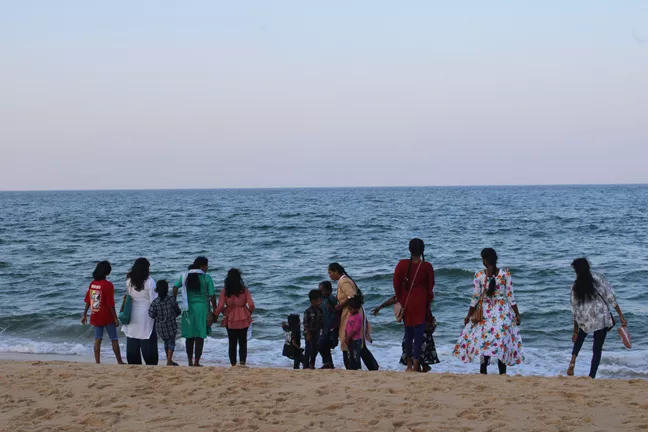
“Many of them had never been there,” says Anuratha Rajaretnam. “If they leave home, it’s usually to go to the hospital or meet authorities. But to simply be with their children and family, without any demands, is unusual.”
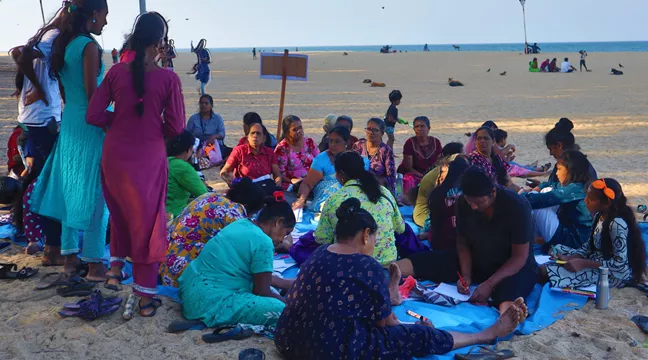
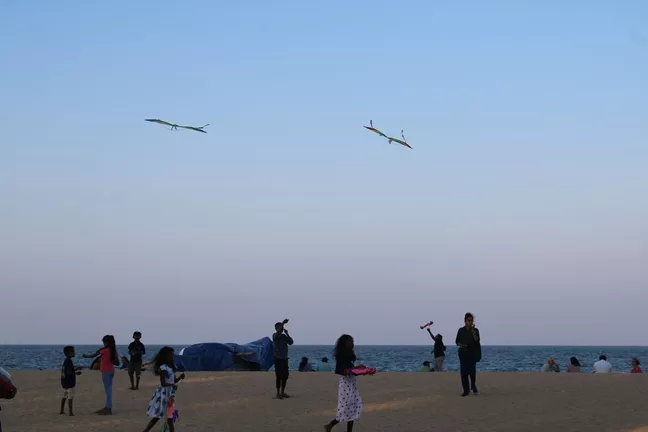
On March 8th, even if just for a moment, the weight of daily life was lifted—making room for joy, rest, and freedom. Women and children traveled from different villages to gather on the open beach. There was space for play, dialogue, creativity, and most importantly—rest.
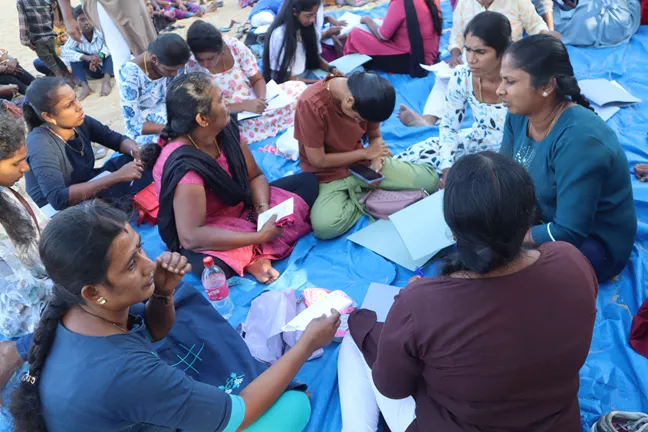
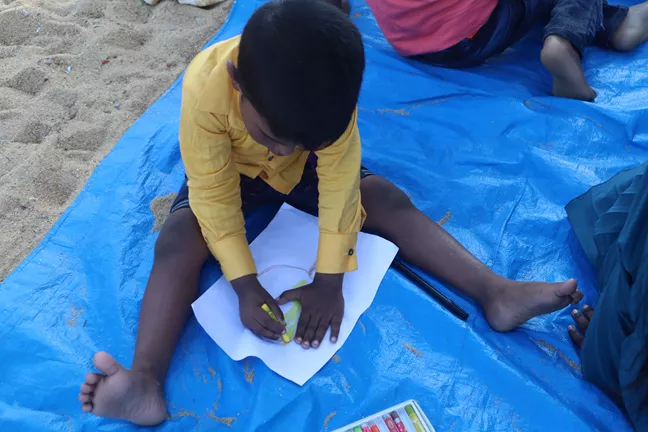
Children painted emotions with colors: What does joy look like? What does anger look like? What does it mean to be brave? Through shapes and color, they explored their own experiences. Meanwhile, the women sat in small groups, sharing stories, writing poems, reading texts, and singing songs about strength, sadness, and resistance. Those who wished to simply sit did so—free of pressure or responsibility—for just a few peaceful hours by the sea.
“It was not just a celebration. It was a demand for the right to rest, to freedom, and to play,” says Anuratha Rajaretnam.
The day was documented through photographs, paintings, and poems, which were later published in Suriya’s annual journal, Penn—a local voice for women’s movements and stories.
Text: Ulrika Hammar
Photo: The Suriya Women’s Development Centre