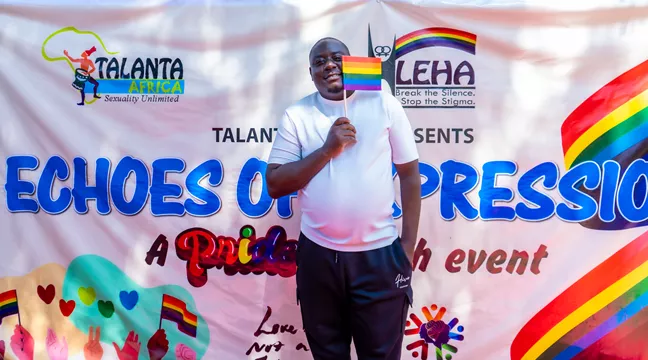
Talanta: Where creativity becomes activism for Kenya’s queer voices
On the outskirts of Kisumu in western Kenya, the organisation Talanta brings together young LGBTQI people through art and culture — building community and driving change.
About a dozen people have gathered at the Talanta office on the outskirts of Kisumu, Kenya. They’re tired — yesterday was Pride, and “people called people,” so what was meant to be a afternoon event stretched late into the evening.
“How are you? Did you get any sleep at all last night?” Stephen Okwany, Director of Programmes at Talanta asks his colleague Maxie Daniel.
“I’m fine, I promise. It’s just my face that won’t cooperate,” Maxie replies. It quickly becomes clear that quick-witted remarks come naturally to her — not surprising, considering she’s also a spoken word artist.
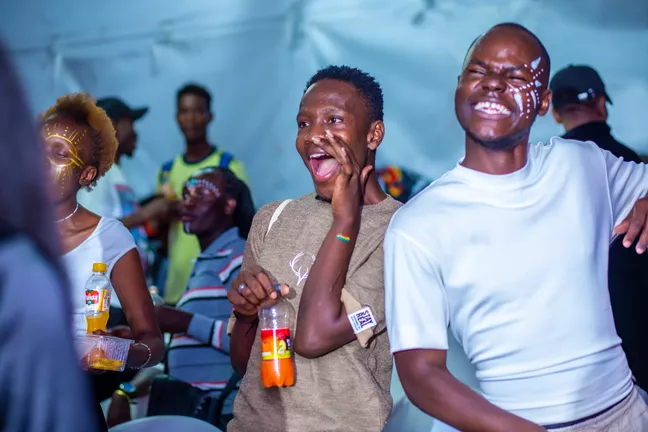
Despite the fatigue, there’s a sense of satisfaction in the room. Everyone is still buzzing from the success of yesterday’s celebration. Not just because the event brought together over 200 people in a community where LGBTQI identities are heavily scrutinized, but also because many attendees had a chance to express themselves creatively. One participant proudly mentions doing some amazing face painting; another recited poetry. Some prefer to stay behind the scenes, a bit shy, but still very much part of the group.
Talanta means talent in Swahili, and the organization’s mission is to unite creative talents within the LGBTQI movement.
“When we tried to register as an organization in 2017, it was difficult to do so as a queer collective,” says Stephen. “So we decided to come together around our talents instead. That allowed us to register under ‘art, sport, and culture’ rather than LGBTQI.”
Stephen has been involved in the LGBTQI movement for many years and recalls a time not so long ago when house parties were the only safe spaces to gather. In Kenya, “homosexual acts” are criminalized, and the police have used this to arrest people and subject them to invasive anal exams. On top of that, people often faced physical attacks or the threat of being outed to family and friends. Things are somewhat better today.
“We developed a strategic plan,” Stephen explains. “We began talking about the right to healthcare for all, regardless of gender or sexual orientation — something that’s actually enshrined in Kenyan law. These days, our opponents see queerness as a health issue. That’s made things a little easier. But we don’t want to stop there. We’re so much more than that. That’s why we use art to build narratives rooted in our lived experiences as queer people.”
Talanta now has six employees, a group of ambassadors, and many volunteers. The organization is active in six counties across the region. They work with young people to talk about bodies, sex, and relationships; they train healthcare providers to better support LGBTQI individuals; and they strive to build better relationships with local police.
In many ways, things are moving forward — but there have also been setbacks. Former U.S. President Donald Trump’s statement that there are only two genders has reverberated far beyond America. In Kenya, it has emboldened politicians and religious leaders who now once again frame queerness as a mental illness. If you're not clearly male or female, they argue, something must be wrong. Talanta is pushing back against that narrative — loudly and consistently.
“Through political advocacy, art, and online conversations, we give young LGBTQI people hope,” says Maxie. “We want to reach both those who live openly and those who haven’t yet dared to come out.”
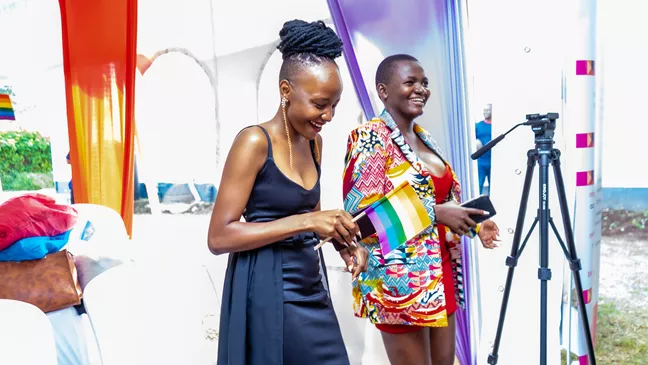
Now, Maxie and her colleagues are dreaming of a stronger base for their work — perhaps a studio where they can create art, run workshops, and sharpen their messaging for social media. Felicity Mudis, a fashion designer and spoken word artist, sums up why such a space would matter:
“Usually, artists and performers are brought in as some kind of temporary entertainment. But at Talanta, you become part of an ongoing conversation. I want more queer artists to find their way here — because I know at Talanta we become so well-equipped, we can take off and fly out into the world!”
Text: Ulrika Hammar
Photo: Talanta