
“Let the Young People Talk”: A Youth-Led Podcast Is Rewriting Sex Education in Ghana
In northern Ghana, young people are taking charge of the conversation about sex, relationships and bodies. Through the new podcast Adventures Too, created by Masi Media and Youth Harvest Foundation Ghana, sex education becomes a conversation between peers rather than a lecture from above.
When researcher and producer Ami Tamakloe first sat down with teenagers in northern Ghana to talk about crushes, consent and early parenting, she first took a step back.
“Rather than position ourselves as authorities, we flipped the dynamic and gave the power to the youth,” she says.
The result is a new, research-driven talk-show-style podcast and YouTube series, developed by Masi Media in partnership with Youth Harvest Foundation Ghana, that treats sexual education not as a lecture, but as a conversation among peers.
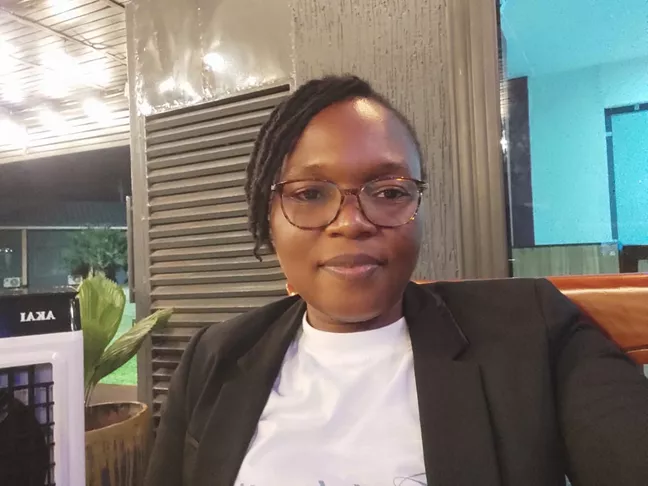
The collaboration began at an RFSU partners’ meeting in Accra, where Malaka Grant, CEO of MASI Media and Priscilla Ankutwia, Executive Director of Youth Harvest Foundation Ghana, first met.
“I realized they were into media advocacy, and we work directly with young people in our adolescent health clubs,” Priscilla recalls. “It felt natural to collaborate: they needed access to youth, and we could provide the base.”
Youth Harvest’s role became essential. The organization mobilized students from its adolescent health clubs—peer-led groups in two senior high schools in Ghana’s Upper East Region where students meet weekly to discuss reproductive health, relationships, and rights. “These young people were already used to talking about SRHR,” Priscilla explains. “They were knowledgeable, and they felt free to speak. That’s why you can see that they are so comfortable in the episodes.”
Beyond students, Youth Harvest also secured permissions from schools, reached out to parents for consent when needed, and introduced Ami Tamakloe to local stakeholders such as teachers and health workers.
A culturally rooted answer to a real gap
“The project is about filling the gap in sexual education in Ghana,” Ami explains. That gap is shaped by a complex web of tradition, religious culture and stigma that can make even basic questions taboo. The series, titled “Adventures Too”, invites groups of students to talk to each other on camera, guided by peer facilitators and a curated set of questions. Adults, including Ami, remain in the background as “guides.”
Priscilla points out that while resistance to comprehensive sexuality education (CSE) has been strong at the national level, especially from religious leaders, local parents in the Upper East have been supportive.
“They see the reality of teenage pregnancy and school dropouts,” she says. “They know they don’t always have the knowledge to guide their children, so they welcome this education.”
Topics that reflect real life, not just “the act”
Across seven episodes, the first season tackles themes including early parenting, crushes, religion and love, menstruation, consent and body autonomy, safe sex and STIs, and disability and love. These were informed both by Ami’s research travels and by insights from Youth Harvest’s ongoing work in schools.
Familiarity and trust matter, Ami says, because “kids are often shamed when they ask certain questions.” In a peer-to-peer setting, the same questions land differently—curiosity becomes legitimate, and learning becomes communal.
The biggest surprise during the recordings wasn’t a shocking confession, but a plea: “Make it easier for us to talk to you.” the kids said. Over and over, students voiced a desire to speak with adults—parents, teachers, pastors—without being labeled “a bad child” for asking questions. That fear of stigma is real, and it silences. The series aims to lower that barrier, and in doing so, to spur better conversations at home, in classrooms and in youth clubs.
Production choices that challenge “respectability”
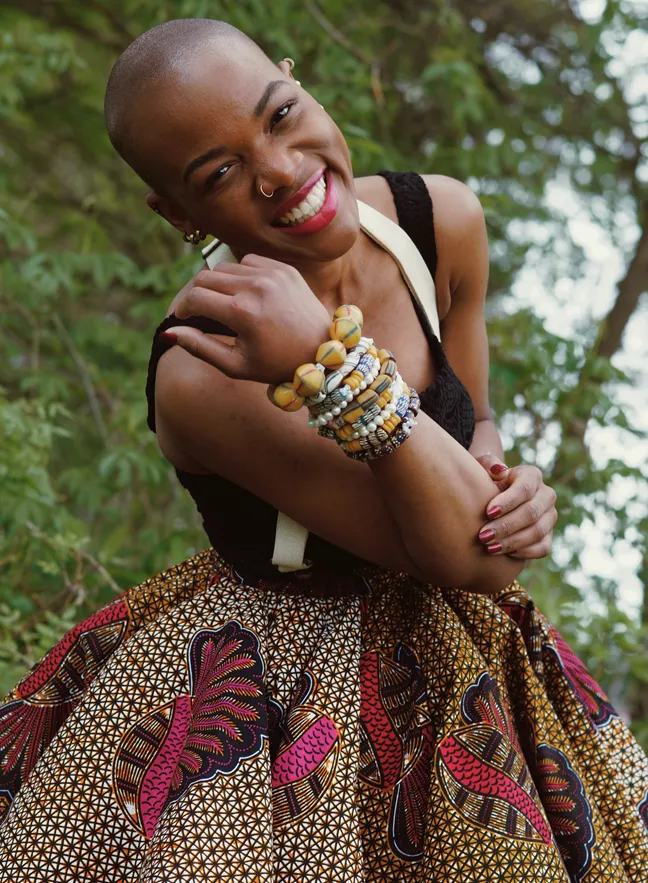
From the opening animation to the music, the show gently contests narrow ideas about who is “respectable” and who is “smart.” The illustrated characters include a boy with cornrows and a girl with free-forming locks, styles that, until recently, could get a student reprimanded in Ghana. Ami herself appears with shaved hair, bold eye paint and tattoos:
“I look like this AND I’m working on my doctorate. Quietly, we’re rupturing the archetypes around respectability.”
The theme song, created by two young artists—Miss Fu and Annabelle Rose—was commissioned to travel across borders, sonically and culturally. It carries the energy of Miss Fu’s original track while swapping explicit lyrics for a vibe that can play in Ghana, East Africa, Europe and the Caribbean alike.
On set, respect is non-negotiable. One simple device is a call-and-response clap—“smart, strong, wise, informed”—that doubles as a moment of affirmation and a gentle way to bring a lively room back to order. Each taping names rotating “class prefects” who can trigger the clap when voices pile up.
While the youth lead the conversation, each episode closes with an adult perspective, for example a midwife in the early-parenting episode or a long-time educator reflecting on crushes. The goal is to add context without overpowering the teens’ voices.
Finding the audience
Although the format is often described as a podcast, the series is designed for YouTube and in-person use—schools, churches, mosques and family living rooms. It’s also being cut into short-form clips for TikTok and YouTube Shorts to meet shorter attention spans without truncating core conversations.
Looking ahead, both MASI Media and Youth Harvest envision expansion: more episodes, youth clubs in more schools, and perhaps even national TV broadcasts. Priscilla sees another opportunity: screening the episodes at Youth Harvest’s annual Youth Parliament—a gathering of hundreds of club members who debate, write essays, and perform on social issues. “That will be a chance for them to watch, reflect, and give feedback.”
Watch the youtube serie Adventures Too here.
Text: Ulrika Hammar