The Pleasure Project opens up for conversation
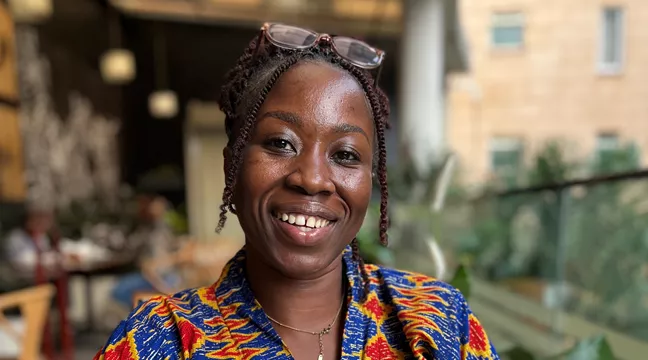
Hello, Judy Amina, executive director of the SRHR Alliance in Kenya. Tell us more about your Pleasure Project!
“Pleasure is one of the main reasons why both young people and adults have sex. Yet this perspective is often missing from sex education. Instead, the focus is on risk and disease prevention. With our Pleasure Project, we want to change this. We train CSE facilitators at the local level so that they can offer sex-positive, inviting education that helps young people ask questions and understand consent, boundaries and healthy relationships."
How has the project been received? Is it controversial?
“Yes, it is a little controversial, especially since sex education is already a sensitive issue in many African countries, including Kenya. We have no curriculum for this. Introducing the perspective of pleasure makes it even more difficult.”
How do you solve this?
“Among other things, we have adapted our language to the target group. We talk about sex positivity, which is more accepted in society. We avoid words like ‘prostitution’ and say ‘sex work’ instead. Instead of saying someone is ‘promiscuous,’ we say ‘adventurous,’ which makes young people more open to conversation. We also avoid images that objectify women and use inclusive and respectful images instead. It's all about having conversations that are inviting rather than judgemental.”
How long has the project been running, and are you seeing any effects yet?
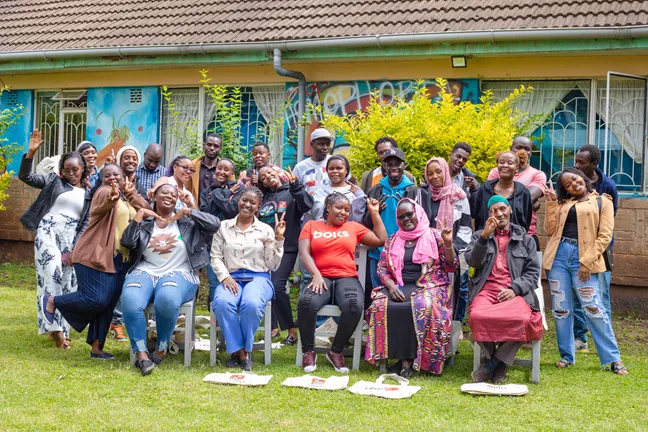
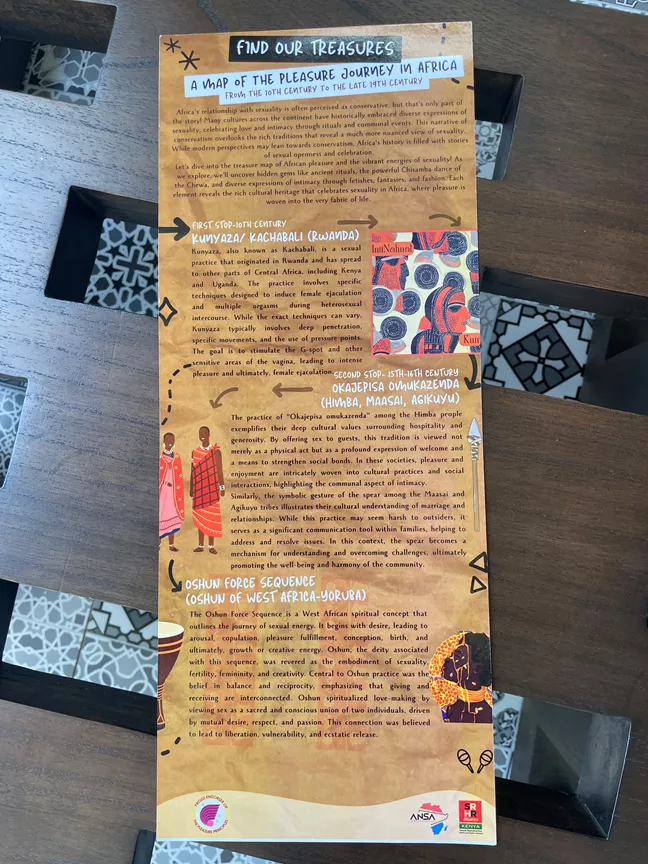
“The project has been running for a year and a half now. We train facilitators and also provide training to other organisations, both in Kenya and in the region, via online seminars. We have also produced material that shows that pleasure is actually African and it's not a Western thing.”
“We are now seeing that many facilitators themselves are becoming more open to talking about pleasure and the positive aspects of sexuality. They are using more flexible and inclusive language and adapting better to different cultural contexts.”
What is your role in the project?
“I am the Executive Director of the SRHR Alliance. I was one of the first to be trained in the Pleasure Project and my role is to develop the work, both in our team and among other organisations. I coordinate training, network and seek resources.”
Has the project changed your own view of sexuality?
“Yes, very much so. I became involved in the issue of pleasure in 2019 through a project research which aimed to measure pleasure and sex positivity in organizational CSE curricula. I then realised how many prejudices I had. For example, I didn't understand open relationships before. But the project has taught me that my lifestyle doesn't have to be right for everyone. We must respect other people's choices and see things from different perspectives.”
What was your own sex education like at school? How would you have liked it to be?
“The sex education we received was almost entirely about diseases and pregnancy. The message was: ‘If you have sex, you will get pregnant and risk dying.’ This created a lot of fear and prevented us from talking about important things. Today, young people certainly have access to more information via the internet, but they often lack guidance in sorting through the information.”
What are the risks and benefits of young people now being able to easily find information online?
“The internet contains both correct and incorrect information. Without guidance, young people can easily be misled. Previously, we were just told ‘don't do it’, but now they at least have access to information, although they need support to understand it.”
Can you talk about masturbation in the project?
“Yes. During the training sessions, young people ask questions that are not otherwise addressed in the curriculum. Many CSE facilitators are afraid to talk about these topics for personal, cultural or religious reasons. But we encourage them to address the questions, because otherwise young people will look for the answers elsewhere.”
Thank you very much for your time! Is there anything else you would like to add?
“I just want to say that even though pleasure and sex positivity are still controversial, we should dare to talk more about them. We talk about these things privately with friends and colleagues, but we also need to have these conversations publicly. In addition, more research is needed to demonstrate the positive effects of addressing pleasure in sex education.”
This is what Kenyan young people ask CSE facilitators:
- Can men get pregnant? (After seeing articles about transgender people.)
- Does the emergency contraceptive pill cause infertility?
- Is masturbation a sin? Will I go to hell if I masturbate?
- If I take the contraceptive pill, can I never get pregnant again?
- Can women initiate sex, or is it only men?
Text and photo: Ulrika Hammar